
Burke Parole and Probation Differences
North Carolina uses several forms of community supervision, and their legal paths are not interchangeable. Traditional parole is conditional release for people eligible under older sentencing laws, especially offenses committed before October 1, 1994. Ordinary parole ended under Structured Sentencing for later crimes. A person leaving prison under the newer system may instead begin post-release supervision, often shortened to PRS. The North Carolina Post-Release Supervision and Parole Commission sets or administers key conditions for those release paths.
Probation is ordered by a court. It can follow a suspended or community sentence and does not prove that the person finished a prison term. All three statuses place a person in the community, but none means the whole sentence has been discharged. The NC DAC Offender Public Information search reports prison and supervision status separately.
| Status | How it begins | What public status means |
|---|---|---|
| Parole | Commission grants conditional release in an eligible older-law case | Outside prison under parole conditions |
| Probation | Court orders community supervision, often with a suspended sentence | Supervised by DAC, but not proof of prior prison release |
| Post-release supervision | Structured sentence reaches its statutory prison-release point | Outside prison while the supervised sentence phase continues |
- Discharge
- The formal end of a custody or supervision term.
- Revocation
- An official decision that ends community supervision and may return the person to custody.
- Absconder
- A person whom DAC reports as failing supervision with location unknown.
- CRV
- Confinement in Response to Violation, a defined custody response to certain supervision violations.
Verify Burke Post-Release Supervision
Start with the state record, not the Burke County Jail roster. The jail catalog reports current county custody. It cannot establish active parole, probation, or PRS. DAC says its public search covers state prisoners, probationers, and parolees and includes historical data, while excluding county and city jail records. That jurisdiction line prevents a common false conclusion.
- Open the NC DAC offender search and select All or Active Probationer-Parolee.
- Search by offender number when known. Leading zeroes are not needed. Otherwise use name, sounds-like surname, birth date, or demographics.
- Match the date of birth and identifiers before opening a record. Similar names can produce the wrong person.
- Read inmate status and probation, parole, or post-release status as separate fields.
- Open the supervision history. Note whether it is active, inactive, completed, or tied to a different county.
- Contact the current District 25 office when a public label is unclear or reporting-office routing is needed.
An “Active Probationer/Parolee” result means DAC reports community supervision. It does not mean current incarceration. An inactive result may preserve an older prison or supervision episode. For a broader release-record search, use the Burke County released-inmate search to keep county jail, state prison, court, and federal paths separate.
Burke Supervision Office in Valdese
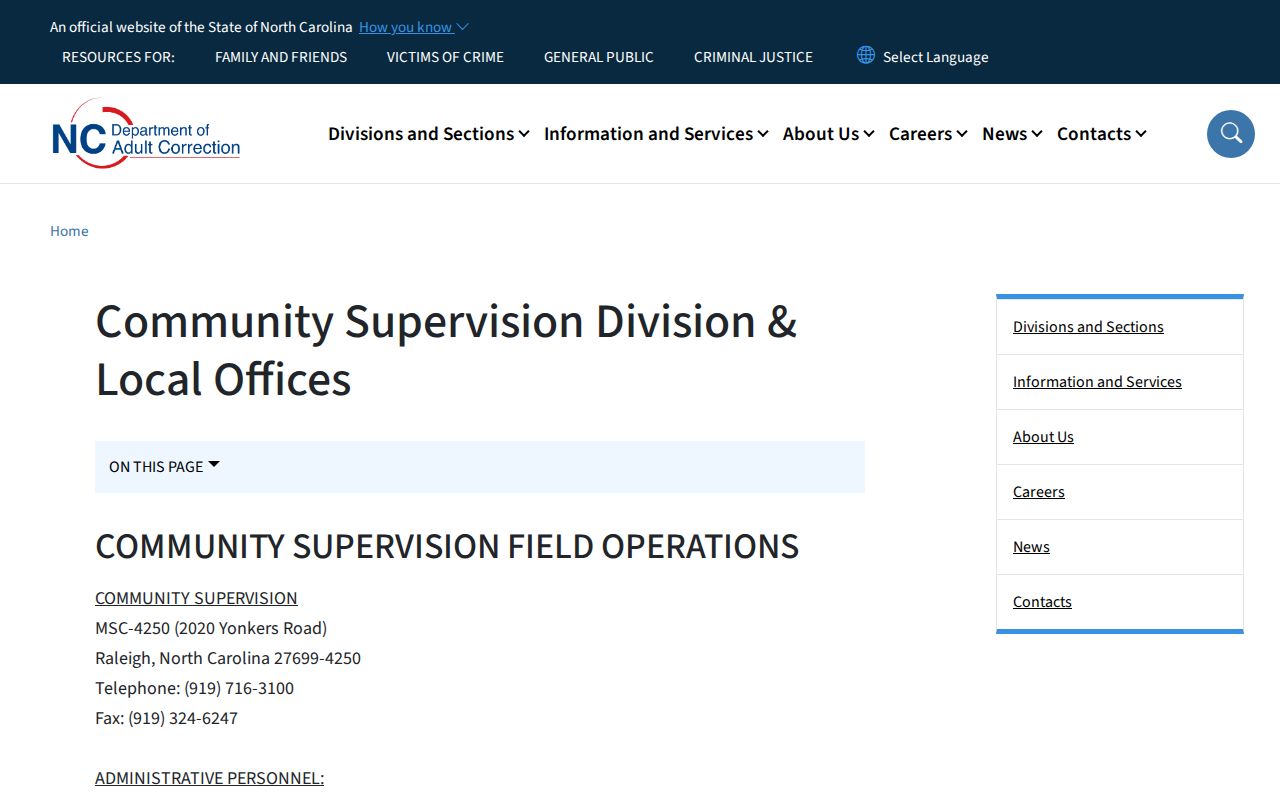
Burke County belongs to Community Supervision Judicial District 25 with Caldwell and Catawba counties. The current official roster dated September 11, 2025 places the district office in Valdese. That newer roster supersedes a July 2023 directory that listed a Morganton address. Old directory results should not be treated as a second current office.
The official Community Supervision office roster shows the current entry:
Community Supervision Judicial District 25309 Colombo Street SW, Suite 104
Valdese, NC 28690
Phone: 828-432-2853 or 828-437-7452
Fax: 828-874-0434
The roster image below provides the source context for the District 25 entry.
Confirm the office location before visiting because field-office assignments and directories can change.
Burke Probation Absconder Search
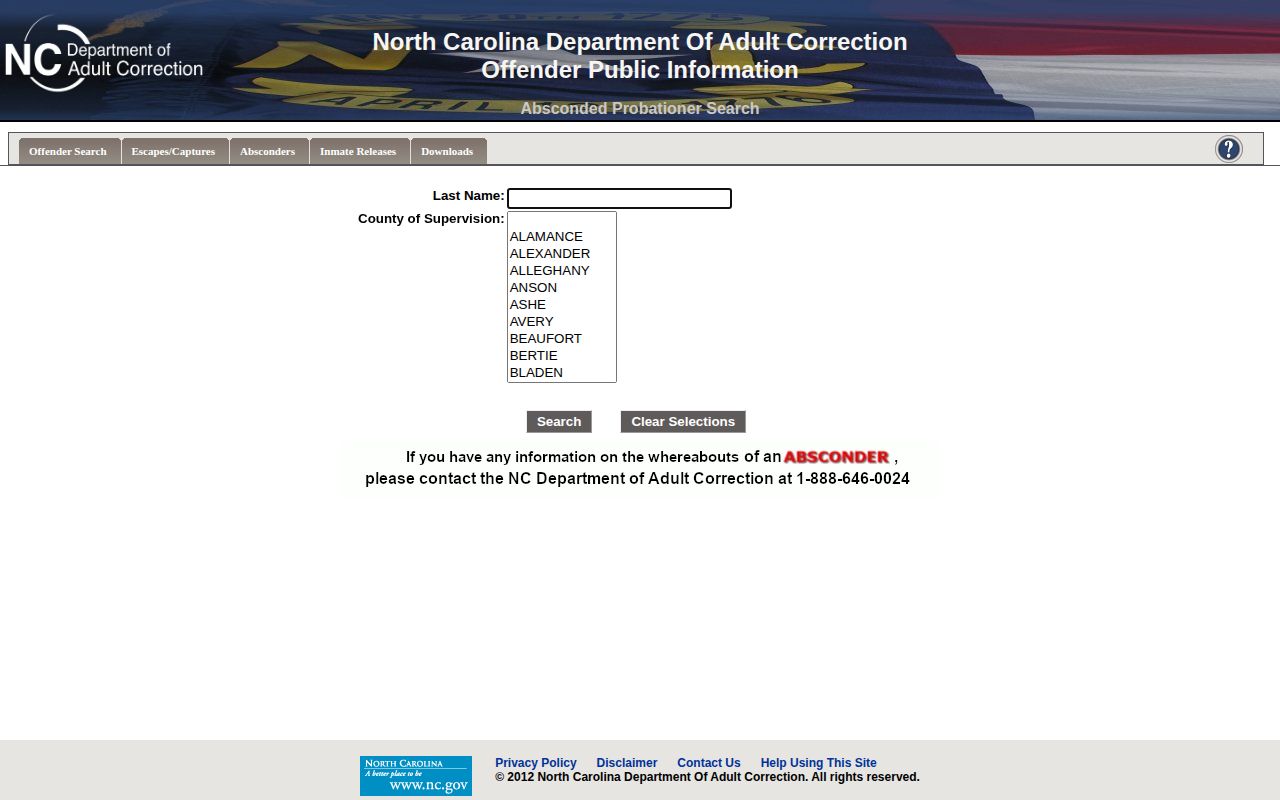
DAC maintains a separate Absconded Probationer Search. It accepts a surname and a County of Supervision filter, including Burke. This tool has a narrow meaning. An entry reports that the supervision agency considers the person an absconder. It does not prove a new arrest, a new conviction, an automatic revocation, or present custody in Burke County Jail.
Use the result as a supervision-status lead. First match the identity. Then compare the main OPI history and any public court events. If current jail custody is at issue, check the reporting jail rather than translating “absconder” into “inmate.” A warrant may exist, but the public absconder label alone does not establish one. Likewise, a missing name does not prove that supervision ended.
The official search interface demonstrates the county filter used for a Burke County parole or probation check.
Read any match with the person’s main DAC record and current agency information.
Burke Supervision Violations and Custody
Conditions are case-specific. Public OPI status does not disclose the full supervision case file. DAC explains that supervision files are confidential under G.S. 15-207, so a public status and an office phone number do not create access to officer notes, assessments, or every condition. Court judgments may show public terms, while the supervising office can route a person to the correct official contact.
A technical violation can trigger a defined response, including CRV in eligible circumstances. Absconding or a new crime can support revocation proceedings. Yet neither event proves that the person has already returned to prison. A transfer to the temporarily closed Burke CRV Center should never be assumed from an old program description. Current custody must come from the agency holding the person.
NC SAVAN, also called VINELink, can provide custody-change notices when a participating county or state agency reports an event. It is a notification layer, not a complete supervision file.
Burke Parole Review Records
North Carolina does not use the conventional public future hearing calendar that many people expect. The Commission’s official explanation says commissioners ordinarily review files and vote on their own rather than meeting as a group with the person. Eligible juvenile life-with-parole cases are a stated exception and may receive a videoconference review.
Review cadence is the useful schedule substitute. Eligible cases are ordinarily reviewed at least yearly, while first- or second-degree murder cases may be reviewed every three years and sexually violent offenses every two years. The Commission’s monthly discretionary-parole review reports begin with September 2024. They use precise outcomes such as Incomplete Decision, Suspend Decision, Regular Parole, Community Service Parole, Early Medical Release, and 90-Day Mandatory Parole.
An investigation is not a grant. A grant is conditional release, not discharge. Once effective, the person’s DAC status should be checked again. Underlying Commission files remain confidential, and G.S. 15A-1371 governs eligibility and review for covered cases.
After a Burke Jail Release
Post-release supervision questions can overlap with practical issues left at the Burke County Jail. The official jail handbook says property remaining after a person leaves is treated as abandoned after 30 days and disposed of under policy. That deadline is separate from parole or probation reporting duties.
The handbook also gives released people a specific route for scanned mail. The person emails bill.viggers@burkenc.org with “Burke County Jail,” the inmate name, inmate ID, and an email address. After verification, the material is supplied through a download link. These steps concern jail property and mail, not correction of a DAC supervision record. A Sheriff record issue belongs with the Sheriff custodian, while a DAC status issue belongs with DAC.
Act on property and mail promptly. A community supervision appointment does not extend the jail’s property rule, and the jail workflow does not replace contact with the assigned supervision office.
Burke Supervision Record Boundaries
Public verification has firm limits. OPI can identify an active or inactive supervision status, an offender number, and the history fields DAC makes public. The District 25 office can route a reporting or status question. Neither channel turns the confidential supervision case file into a public record. G.S. 15-207 protects that file, while Chapter 132 does not override records that another law shields.
Use the court file for public judgments and violation orders. Use DAC for state incarceration and supervision history. Use the Sheriff for a Burke County Jail release episode. If a record request is needed, identify the person, date range, custody episode, and exact public fields sought. DAC’s public-record request reaches state data only, not Burke County Jail records. This separation also prevents a court disposition from being mistaken for the exact release time or an inactive supervision label from being mistaken for expungement.
Public records can preserve a former status after discharge. An old entry is historical context, not proof that the same condition remains active today. Match the episode date and current headline status before drawing a conclusion.
Burke Supervision Discharge Records
Discharge is the point at which a supervision term ends. Physical prison release may occur earlier. For that reason, the most recent incarceration episode’s Actual Release Date and the separate supervision status must be read together. A person can have left Foothills Correctional Institution, remain active on PRS, and later reach discharge. County probation can also end without any state-prison release episode.
When OPI shows inactive supervision, preserve the matching offender number and relevant dates. If a public record is ambiguous, use the District 25 office for routing or the DAC public-records channel for state incarceration or release data. The office may not disclose confidential case-file details. Court records remain the source for a judgment, modification, or revocation order.
Final sentence discharge should never be inferred from roster absence, an old parole decision, or a VINELink custody event. Confirm the correct episode with the agency record that created it.